
Overview
The Nikon D2Xs was flown by NASA astronauts across 42 identified missions, in NASA service 2007–2016, contributing 164,720 identifiable frames to the public astronaut photography archive. Traced by manufacturer serial number, at least 41 physical bodies have been identified in the public archive. The Nikon D2Xs was released by Nikon in June 2006.
Body S/N 6027237 is the most heavily documented in the archive, contributing 11,173 identifiable frames across 12 missions including ISS022, ISS018, ISS023. The other 40 identified bodies appear in more targeted mission windows, detailed below.
The Nikon D2Xs bodies were used with a range of lenses in orbit — the most-used include the 400.0 mm f/2.8, 180.0 mm f/2.8, and 28.0-70.0 mm f/2.8. The full lens roster appears in the sidebar.
Exemplar photographs
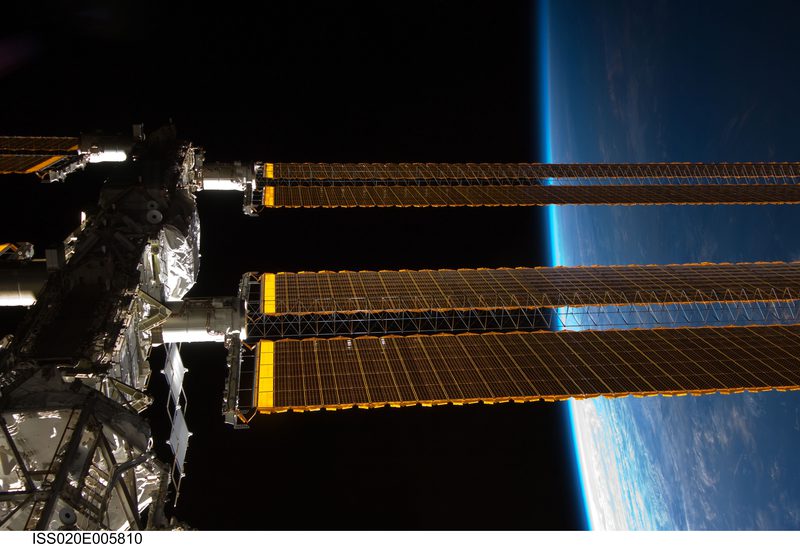
Additional representative frames captured by the Nikon D2Xs bodies in orbit. Full resolution is available at the linked NASA archives.
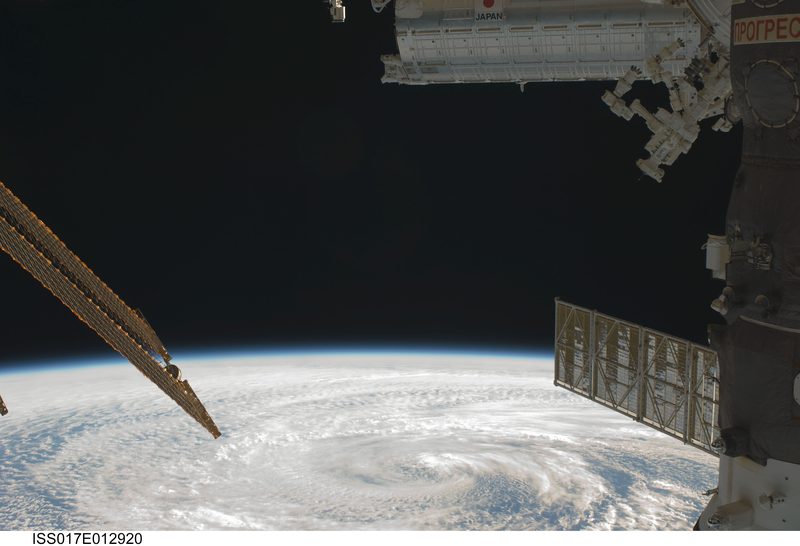
Eastern Pacific Tropical Storm Iselle, later Hurricane Gustav

Photograph of Venezuela
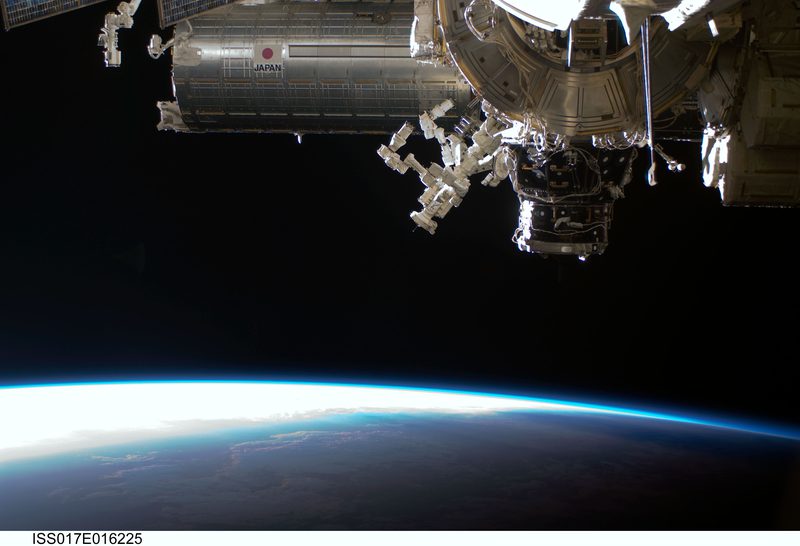
Photograph of Japanese Experiment Module Kibo

Category 2 Hurricane Norbert approaching Baja California
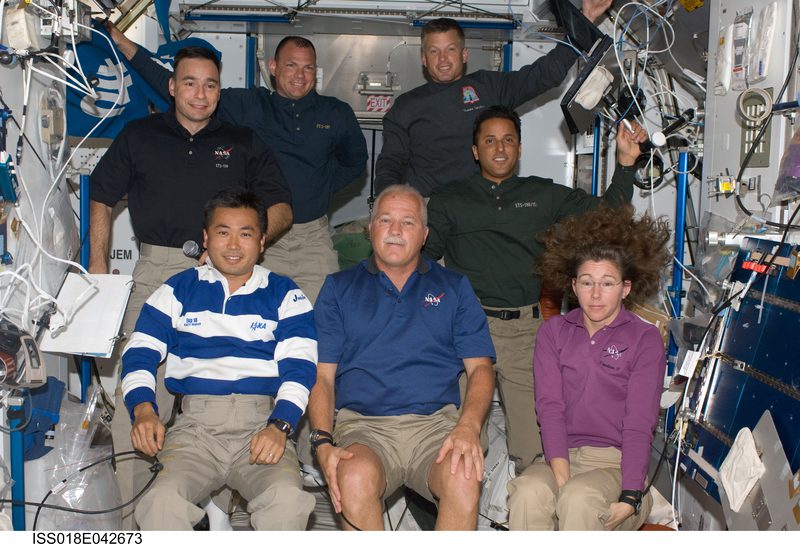
ISS Expedition 18 and STS-119 Crew Photo in Kibo JEM
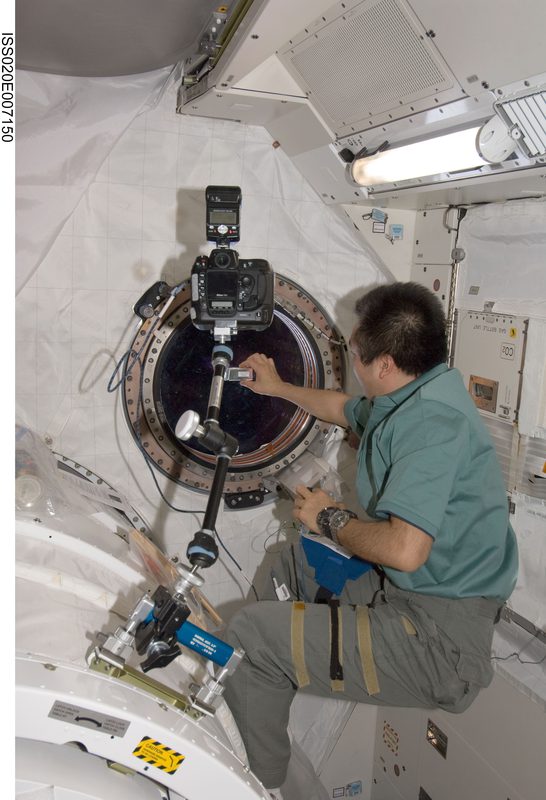
JAXA astronaut Koichi Wakata setting up camera equipment
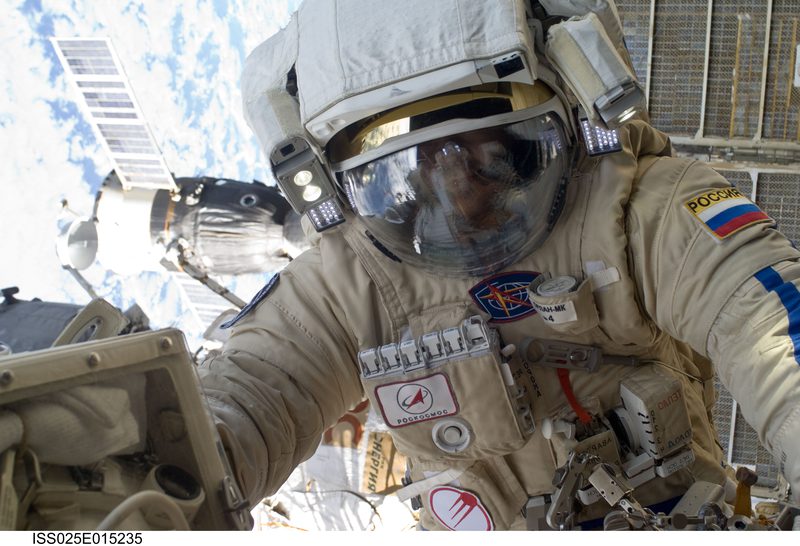
Cosmonaut Oleg Skripochka in an Orlan-MK spacesuit while performing an EVA
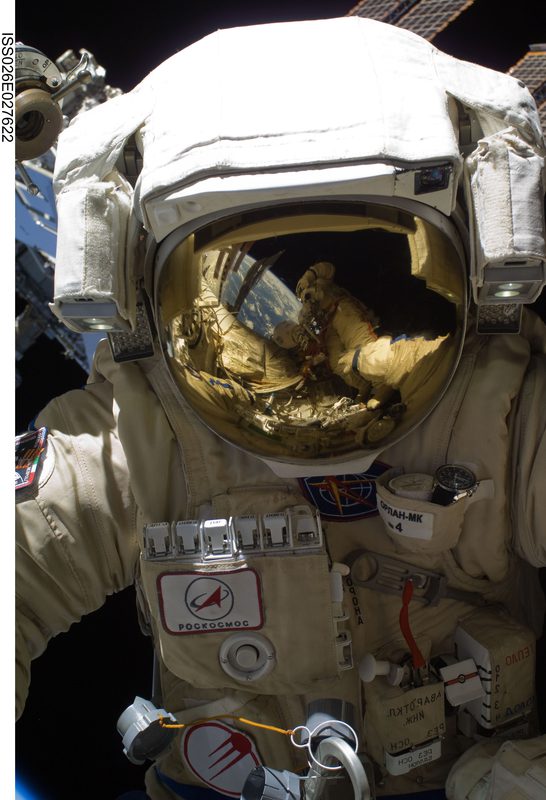
Cosmonaut Oleg Skripochka takes a photo of Dmitry Kondratyev during an EVA
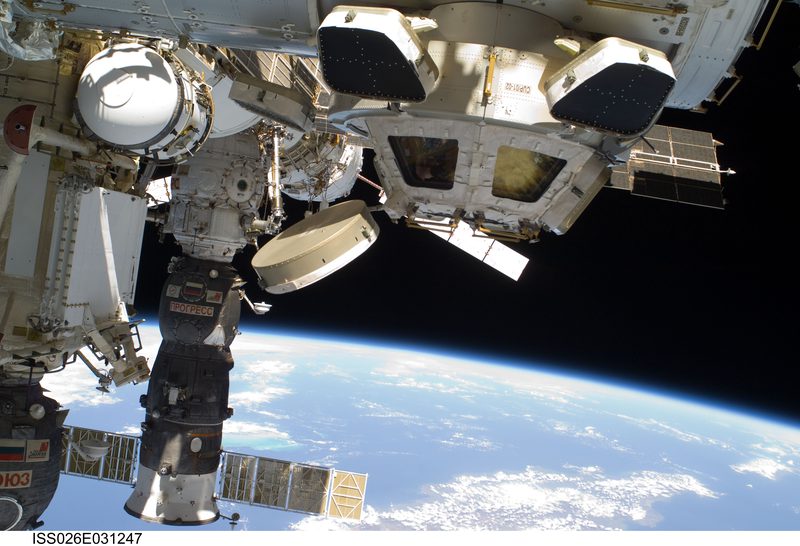
Photo of the cupola during ISS Expedition 26
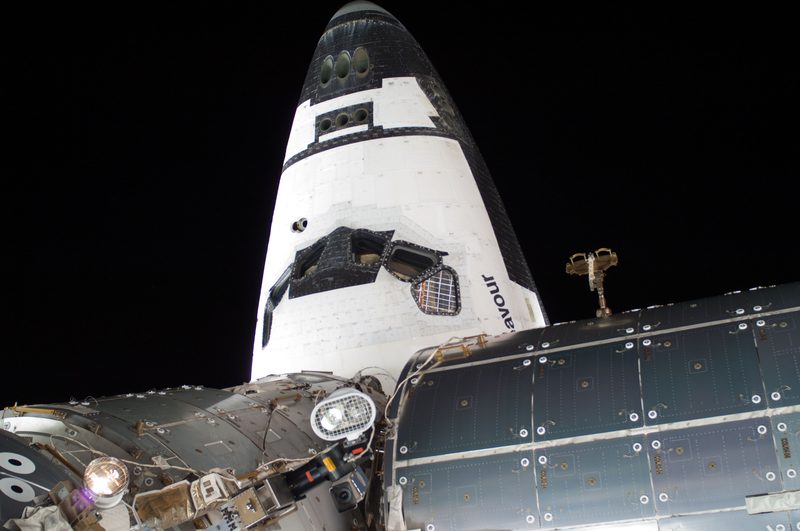
Shuttle Endeavour docked at the ISS during Expedition 28
In NASA service
Nikon began supplying modified D2Xs bodies to NASA in 2007, after progressively stricter certification testing.1 The first flight units reached the International Space Station on STS-124 in May–June 2008: six bodies flew aboard Discovery alongside three NIKKOR lens types (the AF-S DX 12–24 mm f/4G IF-ED, the AF DX Fisheye 10.5 mm f/2.8G ED) and Nikon SB-800 Speedlights, with JAXA astronaut Akihiko Hoshide as the primary operator. Four of the six bodies remained on the ISS after Discovery undocked.2
The STS-124 shipment was a small fraction of the underlying procurement. NASA/JSC solicitation NNJ07210375Q specifies 76 D2XS bodies in total: 48 EVA-capable units with Braycote lubrication (ordered across two line items of 42 and 6, product code 14025414) and 28 standard camera sets (product code 25414) for interior and training use. The same solicitation covered 27 AF-S DX 12–24 mm f/4G zoom lenses, 12 AF DX 10.5 mm f/2.8G fisheye lenses, 33 SB-800 flashes with Braycote lubrication for EVA operation, 31 standard SB-800 flashes, 225 EN-EL4A rechargeable batteries, and 20 EH-6 AC adapters — a fleet-scale procurement to sustain multi-year ISS operations rather than a mission-specific delivery.4
By the STS-125 Hubble servicing mission in May 2009, the Nikon inventory recorded on ISS had grown to six D2Xs bodies (all EVA-capable), 35 NIKKOR lenses (seven EVA-capable), and eight SB-800 Speedlights (two EVA-capable), collectively contributing approximately 29,000 identifiable photographs to the public archive at that point.1 This registry has identified 41 distinct D2Xs bodies by manufacturer serial number in NASA's public astronaut photography archive between April 2008 and March 2015, contributing 13,752 identifiable photographs across 41 catalogued missions — consistent with the 48 EVA-capable bodies procured, allowing for units retained on Earth as spares, training aids, or replacements for cameras retired due to accumulated sensor damage. Twenty of the identified bodies carry a documented NASA property serial number — the range observed spans NASA SN 1106 through 1143 — while the remaining 21 were identified through EXIF alone.
The scope of the modification is more specific than public statements sometimes suggest. NASA's own procurement document for the D2Xs — JSC solicitation NNJ07210375Q, dated 3 August 2007 — specified three modifications to the commercial camera: the strap eyelets were to be removed without compromising the integrity of the camera encasement; standard lubricants were to be replaced with spaceflight-approved Braycote grease; and dedicated firmware was to be loaded. The same solicitation covered EVA-specific SB-800 flash equipment.4 Nikon's 2010 technical retrospective describes only the lubricant change — reflecting what Nikon itself modified before delivery — and NASA has publicly summarized the flight D2Xs as differing from a store-bought camera “only in firmware and lubricant,” a description that captures the operator-visible differences but omits the physical eyelet removal specified in procurement.1,3
Braycote is a Castrol trade name for a family of perfluoropolyether (PFPE)-based aerospace lubricants. NASA relies extensively on the Braycote 600 series because of its exceptionally low volatility and outgassing, broad service temperature range, and compatibility with vacuum and reactive aerospace environments — ordinary hydrocarbon greases outgas in vacuum and are unsuitable for orbital service. NASA/JSC's process specification for liquid lubricant application in force at the time of the D2Xs procurement — PRC-8002 Revision C, dated January 2007 — identified Braycote 601EF and Braycote 602EF as qualified PFPE greases and Castrol Brayco 815Z as qualified PFPE oil.7 Although Braycote 601EF is a strong candidate for the D2Xs formulation given its long heritage in NASA space mechanisms — from Space Shuttle actuators onward — the surviving NNJ07210375Q solicitation text does not identify the specific Braycote grade specified for the cameras.
In orbit the D2Xs is exposed to a radiation environment that gradually damages sensor pixels; NASA reports that some returned units are retired from flight service when the accumulated damage becomes severe.3 Astronaut Don Pettit has described the D5-era operational pattern — the ISS Nikon fleet is rotated back to Earth roughly every six months for replacement, with the most damaged units retired — and a 2017 imaging-science study of the D3s and D4 cameras characterized ISS DSLR service life as six months to a year before cosmic-ray damage forces retirement.5,6 For extravehicular use, the camera and an SB-800 Speedlight mount to a shared bracket wrapped in a thermal blanket that keeps touch temperatures within roughly ±125°C. The SB-800 itself sits inside a custom pressurized housing — the flash will not fire correctly in vacuum — and a modified Nikon SB-29 sync cord provides an AF illuminator in low light.3 On STS-135 in July 2011 — the final Space Shuttle mission — three of the D2Xs bodies then resident on ISS were used during the mission's EVA.3
- Gotō, Tetsuro. “宇宙用ニコン・スペースカメラの開発” [Development of Nikon Space Camera]. Journal of the Society of Photographic Science and Technology of Japan 73, no. 2 (2010): 65–69.
- Nikon Corporation. “デジタル一眼レフカメラ「ニコンD2XS」のスペースシャトルへの搬載について” [Loading of the Nikon D2XS Digital SLR on the Space Shuttle]. Press release, 11 July 2008.
- Horaczek, Stan. “How Does NASA Get a Nikon D2Xs DSLR Ready to Go to Space?” Popular Photography, 28 July 2011.
- NASA Johnson Space Center. Solicitation NNJ07210375Q, 3 August 2007. Solicitation text preserved at
spaceref.com/status-report/nasa-jsc-solicitation-digital-cameras-and-digital-peripherals/; the referenced attachmentprocurement.jsc.nasa.gov/NNJ07210375Q/Digital_Camera.xlsis no longer served by NASA. The 76-camera D2XS order is independently confirmed in Nikon Corporation investor materials,jp.nikon.com/content/dam/web-assets/nikoncom/company/local/jp/ja/ir/ir_library/br/pdf/08h_br_j.pdf. - Growcoot, Matt. “Nikon Makes Special Firmware for Astronauts to Block Galactic Cosmic Rays in Photos.” PetaPixel, 6 December 2023.
- Moser, Kevin. “CRDIR: Cosmic Ray Damaged Image Repair for DSLR Cameras.” Rochester Institute of Technology, Center for Imaging Science Senior Project, May 2017.
- NASA Johnson Space Center Engineering Directorate. Process Specification PRC-8002, “Process Specification for the Application of Liquid Lubricants.” Revision C dated January 2007 (in force at the time of the D2Xs procurement); the current Revision D (June 2020) is preserved at
nasa.gov/wp-content/uploads/2023/03/prc-8002-current.pdfwith the revision history recording Revision C as dated 1/2007.
Commercial availability
Nikon D2Xs on the used market
The bodies documented in this registry are the specific units NASA sent to orbit. The commercial market carries the same Nikon D2Xs model at accessible prices for collectors, photographers, and researchers. Listings shown are the same model, not the specific bodies flown.
CARES LLC participates in the eBay Partner Network. Purchases via this link may generate commission at no additional cost to you. The listings shown are the same Nikon D2Xs model used by NASA, not the specific bodies flown.
Bodies identified
Each identifiable body of the Nikon D2Xs that appears in NASA's public astronaut photography archive, sorted by frame count.